cleveland.com
- 3.2
- Rating
- 100.00K
- Installs
- Free
- Price

 Analysis by App-foxy
I approached cleveland.com as a reader who wants local reporting without constantly searching through a browser. It is a free News & Magazines app from cleveland.com, focused on Cleveland-area coverage rather than trying to be a general national news reader. That narrow focus is its main reason to exist, and it also defines who will get the most from it.
In everyday use, I found the experience most useful when I already knew I wanted local information: what is happening around the region, which stories are developing, and what deserves a closer read later. It is less compelling if your news routine is built around one broad aggregator that mixes national headlines, international events, sports, weather, and personalized recommendations in one place. Here, the local angle comes first.
How the reading experience works for different people and situations
I find the reading experience depends less on how often someone follows the news than on what they need from a local update: a quick orientation, a comfortable long read, or a source they can revisit deliberately. Thinking about those different situations helps clarify when a focused Cleveland feed is convenient and when a browser or broader reader may fit better.
You May Also Like

 Blood Strike: 2.5 Anniversary
Blood Strike’s Loadouts Turn Every Drop Into a Tactical Gamble
A close look at Blood Strike’s custom loadouts: how fast access to signature weapons reshapes its battle royale rhythm, rewards preparation, and narrows the gap between fights.

 Pandora - Music & Podcasts
Pandora’s Music Is Easy to Start, but Harder to Recover
Pandora’s strength is its low-effort path from a seed to a station. Its weak spot is how much confidence it asks you to place in connection, setup, and quiet recovery.

 8 Ball Pool
 Is Built on Rivalries, Rematches, and Routine
A close look at the rivalries, rematches, shared routines, and unanswered safety questions that turn a quick pool match into a persistent mobile community.

 Samsung Music
’s Quiet Strength Is Playing What You Already Own
Its reach comes less from spectacle than from dependable access to a personal library. That simplicity is both the app’s strongest retention engine and its ceiling.

 AccuWeather: Weather Radar
AccuWeather Review: A Quick, Clear Forecast for Everyday Decisions
For everyday plans, the best forecast is the one you can understand quickly. AccuWeather makes rain timing, radar, and local conditions easy to act on, with a few trade-offs.

 Hill Climb Racing
Why Hill Climb Racing Still Turns Crashes Into One More Run
A tiny car, a bumpy hill and one more upgrade: Hill Climb Racing keeps resurfacing because its simple chaos makes every near-miss feel personal.
More From Our News Desk



Readability and navigation for local news
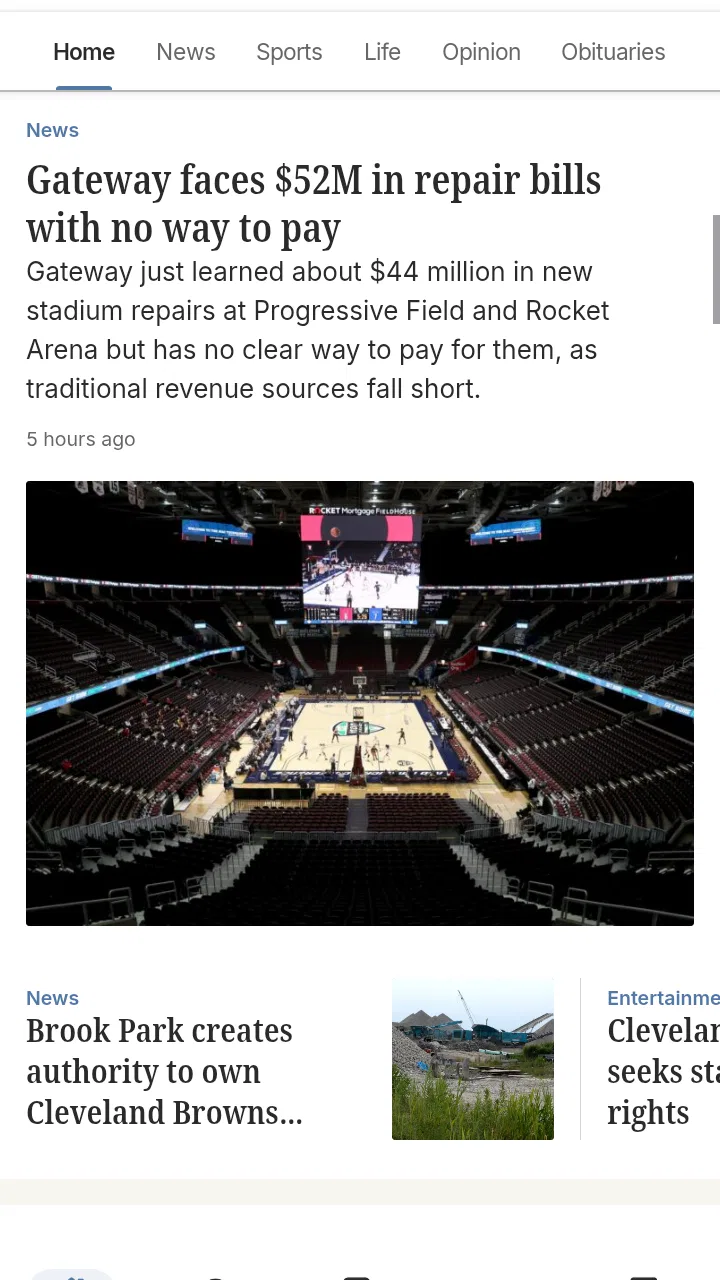
The app’s purpose is easy to understand from the moment you open it: it brings Cleveland-area news into a dedicated mobile space. That clarity matters. I did not have to begin with a complicated setup or learn an unfamiliar productivity system. For a reader who checks headlines during a commute, over breakfast, or between appointments, a focused local-news destination can feel more direct than opening a browser and navigating through several pages.
That said, a focused news app still asks the reader to make quick decisions. Headlines compete for attention, and news pages naturally contain different levels of importance. I recommend treating the main feed as a starting point rather than assuming the first item is the only story worth reading. When I have limited time, I scan the headlines first, open the stories most relevant to my neighborhood or plans, and leave longer pieces for a quieter moment.
For people who need larger text or stronger visual separation, the practical experience will depend partly on the phone’s own display and text settings. I would not choose this app expecting a specialized reading interface designed around accessibility tools. Instead, I would test it with the device settings I already rely on and pay attention to whether headlines, labels, and article text remain comfortable at the preferred size.
One useful habit is to distinguish between quick headline checking and full reading. The former works well when you need a fast sense of what is happening locally. The latter requires more attention, particularly when a story includes several names, locations, or developments. Saving a story mentally for later is easy enough, but readers who need a carefully organized reading queue may prefer a browser workflow or a dedicated news service with more explicit organization.
The developer is cleveland.com, and the app has been available since February 19, 2011. Its current version is 5.0.0, with Android support beginning at version 8.0. That makes the app relevant to people using older compatible phones, although compatibility alone does not guarantee that every device will present text and controls equally well. I would check the layout on the actual phone used by a family member rather than assuming the experience will be identical across screens.
Motor and sensory considerations during ordinary use
News reading is usually less physically demanding than tasks that require constant typing, dragging, or rapid interaction. That is a point in this app’s favor for readers with limited dexterity. The basic activity is selecting a story and moving through text, so it can fit a low-interaction routine better than apps that expect frequent gestures or detailed input.
Still, tapping small targets, scrolling through a busy feed, and returning to the right place in an article can become tiring for anyone with tremors, reduced precision, or hand pain. I would use the phone’s standard interaction aids where available, such as enlarged display settings or alternative touch controls, and then judge whether the app remains comfortable. The important test is not whether the app opens, but whether a reader can reliably choose a headline without accidental taps.
Sensory needs deserve the same practical attention. A news app can be challenging for someone who is sensitive to visual clutter, bright screens, frequent movement, or crowded pages. I found that the best approach is to control the surrounding environment: lower screen brightness, use a calmer display setting when available on the phone, and read one article at a time instead of trying to process the entire feed. These adjustments are not special functions of the app, but they can make a meaningful difference.
For readers with low vision, text size is the first thing I would test. Enlarging text may improve comfort, but it can also change how much information fits on screen and may require more scrolling. That is a real trade-off: bigger text can be easier to read while making the feed feel less efficient. Someone who reads local news for long periods should prioritize comfortable article text over seeing many headlines at once.
People who rely on screen readers should evaluate the app directly with their usual assistive setup. I would not promise that every control or piece of article structure will be announced in the most useful order, because that depends on the app’s implementation and the device. If a screen reader is essential to your daily reading, compare the app with the cleveland.com mobile website before settling on one. The website may offer a more familiar browser-based route, while the app may feel quicker for readers who prefer a dedicated icon and native opening experience.
Situational access: when a local-news app earns its place
The strongest use case is a person living in or closely following the Cleveland area who wants local reporting within reach. Imagine checking the app before leaving home because you want to understand what is happening in the region, then opening one story during a lunch break and returning to another in the evening. That routine makes sense because the app stays centered on the area you care about instead of asking you to filter a much larger stream.
It can also suit someone who has moved away but still wants a connection to Cleveland-area events. In that situation, the app’s local emphasis becomes more valuable than a generic national reader. You are not installing it for endless variety; you are using it as a place to check in with a particular community.
On a phone with a smaller screen, I would avoid judging the app solely by the opening feed. The more important question is whether the article view remains readable after you select a story. Smaller screens can make headline scanning awkward, but they may still work well for one-article-at-a-time reading. Conversely, a large display can make scanning easier while encouraging you to consume more information than you intended.
For people with inconsistent internet access, the app should be treated as a live news-reading tool rather than a guaranteed offline library. I would open important stories while connected and avoid assuming that every article will remain available without a connection. If your day involves long stretches underground, rural travel, or strict data limits, a service built around explicit offline reading may be a better match.
Data-conscious readers should also think about their habits. Local news can involve photos and repeated feed refreshes, so checking headlines briefly is different from browsing continuously. I found it sensible to open the app when I have a clear reason to read, rather than repeatedly refreshing it throughout the day. That keeps the experience focused and reduces the chance of turning a short check-in into an unplanned scrolling session.
What the app does well for inclusive everyday reading
The app’s clearest strength is focus. A reader who wants Cleveland-area news does not need to build that local emphasis from a broad collection of unrelated sources. That can help people who are overwhelmed by large feeds, older users who prefer a single familiar destination, or anyone who wants fewer decisions before reaching the relevant material.
It is also approachable for people who do not want to create a complicated news system. The app is free to install, carries a Teen content rating, and has passed the one-hundred-thousand-install mark. Those details do not prove that it will suit every reader, but they show that it is an established option rather than an obscure experiment.
Another advantage is the possibility of building a simple routine around it. I can imagine a caregiver checking local stories on behalf of someone who does not enjoy browsing the wider web, or a family sharing one phone during a morning routine. The app’s value in those cases comes from reducing the number of places a person needs to visit. The caregiver still needs to confirm that the text size, contrast, and touch behavior work for the intended reader, but the local scope keeps the task manageable.
For a reader with attention-related challenges, a narrowly defined news source can be easier to approach than an endless personalized feed. I would still set a time boundary, because local stories can lead from one topic to another. A practical workflow is to scan the feed, choose one or two articles, and stop once those are finished. That makes the app a tool for staying informed rather than another source of uncontrolled screen time.
Remaining barriers and practical trade-offs
The average rating is 3.2 from around 852 ratings, with about 334 written reviews. I read that as a reason to keep expectations measured. The app clearly serves a real audience, but its overall reception is not strong enough for me to describe it as universally polished. Individual experiences can vary by device, reading habits, and expectations, so I would try it personally before making it the only way I follow local news.
The biggest limitation is scope. If you want Cleveland-area coverage, that narrow focus is useful. If you want a single app for national headlines, international reporting, live sports, weather, and several cities, you will probably need other sources. A general news aggregator is better for breadth, while the cleveland.com app is better when local relevance matters more than variety.
There is also a financial consideration. The app is free, but it includes in-app purchases ranging from $7.99 to $199.99 per item. I would review the purchase choices carefully before committing to any paid option, especially if the app is being used on a shared device or by a younger family member. The Teen content rating is another reminder that this is a news product, not a child-focused reading environment.
Readers who dislike app notifications, interruptions, or frequent news prompts should decide early how the app fits their routine. I prefer local news to be something I check deliberately, not something that constantly pulls my attention away from work or rest. If the app’s alerts do not suit you, the sensible response is to adjust them through the device or app controls where available, rather than letting the news schedule dictate your day.
People who need advanced organization may also feel limited. I would not use this as my primary research archive or as a replacement for a browser when I need to compare several sources. For accessibility-focused reading, the browser can sometimes offer more familiar zoom, text-selection, and assistive workflows. For speed and convenience, the app may win. The better choice depends on whether your priority is a dedicated local-news doorway or maximum control over presentation.
Who should use it, and who should choose something else
I would recommend trying it if you live in the Cleveland area, have family or professional ties there, or want a quick local check-in without sorting through a national feed. It is especially suitable for readers who value a simple destination and are comfortable reading articles on a phone with ordinary device-level adjustments.
I would be more cautious if you require highly predictable screen-reader navigation, extensive offline access, unusually large text without layout compromises, or a carefully managed cross-topic news archive. In those cases, compare the app with the mobile website and with a broader news reader before deciding. Someone who rarely follows Cleveland-area news should also skip the installation unless that local focus has a clear purpose.
My own recommendation is to test it in three situations: a quick morning headline scan, a longer article session with your preferred text size, and a low-attention moment when you are tired or distracted. Those tests reveal more than a brief launch. They show whether the feed is easy to navigate, whether article text remains comfortable, and whether the app supports your actual routine rather than an idealized one.
Inclusive verdict for Cleveland-area readers
cleveland.com is a straightforward local-news app with a clear audience and a useful place in a Cleveland-focused reading routine. I like its regional purpose, its low barrier to installation, and the way it can replace repeated browser searches with one familiar starting point. Its accessibility story is more practical than specialized: readers can benefit from phone-level display and interaction settings, but people with specific assistive needs should test the real interface carefully.
The app is not the right answer for everyone. Its moderate reception, paid purchase range, Teen rating, and limited local scope all deserve consideration. I would not install it expecting a complete news ecosystem or a guaranteed solution for every sensory, motor, or navigation requirement.
My bottom line: if Cleveland-area reporting is the part of your news day that matters most, this free app is worth trying as a focused companion. Use it with a deliberate reading routine, check how it behaves with your accessibility settings, and keep a browser or broader news source available when you need more control, greater variety, or a different reading experience.
FAQs for cleveland.com
01What is cleveland.com, and what can I use it for?
cleveland.com is a digital news platform focused primarily on Cleveland, Northeast Ohio, and surrounding communities. It provides local and regional reporting about breaking news, politics, crime, sports, entertainment, business, food, and community events. The app or mobile website is useful for readers who want quick access to headlines, detailed articles, opinion pieces, photo galleries, and updates relevant to the Cleveland area.
02Is cleveland.com free to use, or does it require a subscription?
Many headlines and articles on cleveland.com may be available without payment, but access can vary depending on the publication’s current subscription and metered-paywall policies. Frequent readers may eventually be asked to subscribe after viewing a certain number of articles. A subscription may provide broader or unlimited access, while some newsletters and features can have separate terms. Always check the current pricing and conditions before subscribing.
03Does cleveland.com cover Cleveland sports and local teams?
Yes. Sports coverage is one of cleveland.com’s major features, with reporting, commentary, schedules, analysis, and updates involving Cleveland-area teams and regional college sports. Depending on the season, readers may find coverage of the Browns, Guardians, Cavaliers, high school sports, and other local programs. The depth and frequency of updates can change during major games, trades, tournaments, and breaking sports news.
04Can I receive breaking-news alerts and newsletters from cleveland.com?
cleveland.com may offer newsletters, notifications, and other ways to follow selected topics, although the available options can change over time and may differ between its app and website. These tools can help readers keep up with breaking news, sports, politics, entertainment, food, and local events. Review notification permissions and newsletter settings carefully so you receive useful updates without unnecessary alerts.
05Is cleveland.com available on both Android and iPhone?
Availability can depend on the current product strategy of the publisher, so users should verify the latest listing in the Google Play Store or Apple App Store before downloading. If a dedicated app is unavailable or no longer supported on a particular device, cleveland.com can generally be accessed through a mobile browser. A browser shortcut or home-screen bookmark may provide a convenient alternative.
Pros
- Fast access to breaking news and local Cleveland coverage.
- Useful sections for sports
- politics
- entertainment
- and community updates.
- Article pages are generally easy to scan on a phone.
- Push alerts can help users follow important local developments.
- Provides strong regional context often missing from national news apps.
Cons
- Some content may require a subscription or offer limited free access.
- Advertising can make parts of the app feel cluttered.
- Notification frequency may become excessive for some users.
- Coverage is primarily regional
- with limited value outside Northeast Ohio.
- App performance and layout may vary after updates.

cleveland.com
Gallery